

Table of Contents
anti-planner for ADHD is not just a buzzword — it’s a lifeline for adults with ADHD tired of endless planner guilt and wasted pages. If you’ve tried (and abandoned) traditional systems, this guide reveals why modular, undated setups finally break the cycle—and how to build a system that works on your terms.
Key Takeaways
- Modular, undated planners designed for ADHD replace guilt with flexibility—helping you restart anytime without wasted pages.
- Physical “anti-planners” with refillable sections, dopamine menus, and habit trackers actively support executive function and emotional regulation.
- Top-selling ADHD planners in 2026 use 150–250 undated pages, bleed-proof paper, and customizable layouts—making implementation realistic and guilt-free for neurodivergent adults.
Why Standard Planners Fail ADHD Brains
Standard dated planners almost seem designed to trip up an adult with ADHD. Rigid layouts, relentless daily spreads, and “perfect week” structures quickly trigger the cycle of planner graveyard ADHD guilt. Miss a few days, and suddenly you’re faced with blank or wasted pages—a visual reminder of “failure.” For most ADHD adults, missed appointments, forgotten deadlines, and feelings of overwhelm turn regular planners into anxiety factories rather than tools for executive function. Studies and user feedback consistently highlight that the two most common dealbreakers are guilt from unused pages and the chronic overwhelm of complex daily layouts [1]. Time-blindness and unpredictable motivation don’t mesh with rigid planning systems, and the result is abandonment—and more guilt.

What Makes an Effective Anti-Planner for ADHD?
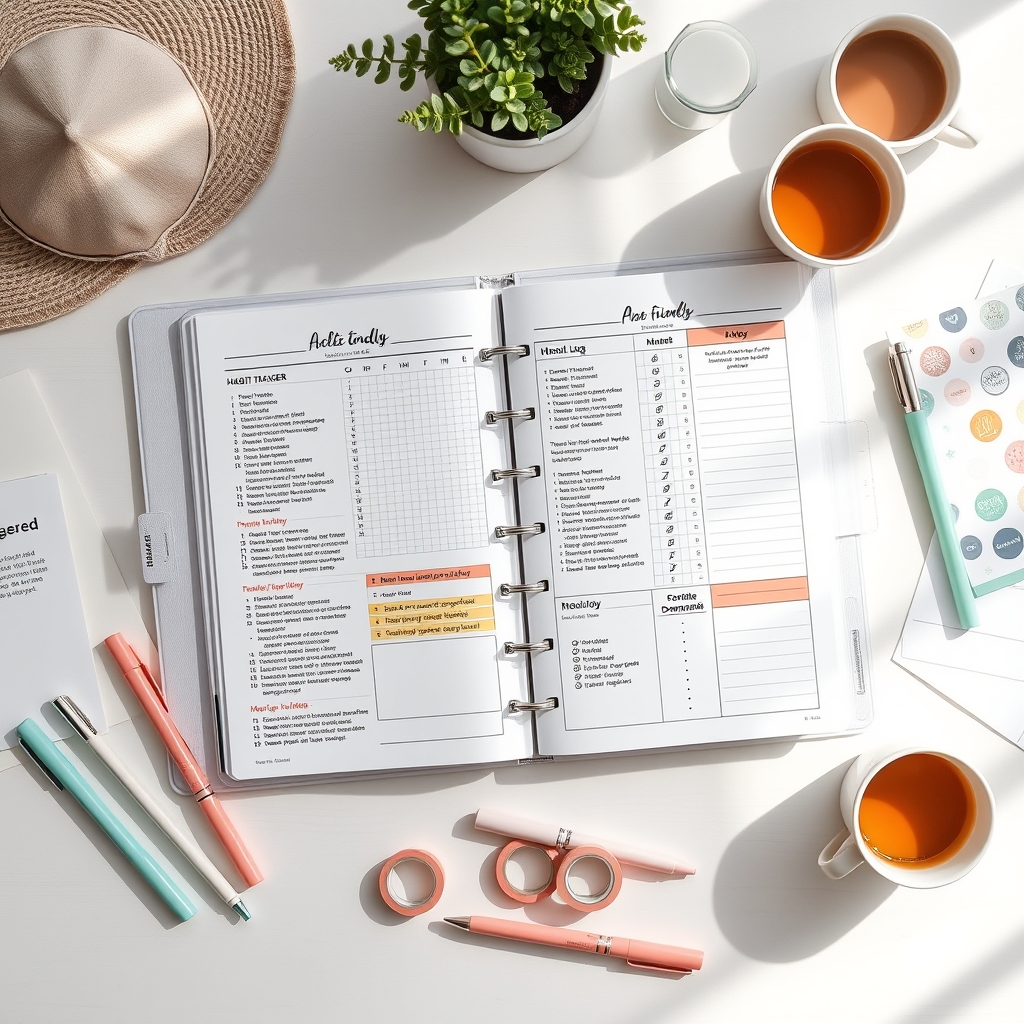
An effective anti-planner for ADHD upends everything about traditional planning. Instead of punishing missed days, it offers a guilt-free, undated, “start-where-you-are” environment. The most successful undated planner for ADHD adults embraces flexibility: you add—or remove—pages as your focus shifts. Modular planner ADHD systems, like disc-binder or 3-ring binders, allow you to reorganize, refill, and add new tools when you actually need them. This design choice accommodates the natural fluctuation in executive function that defines ADHD. Major data points show undated pages prevent the guilt spiral, and that modular systems outperform rigid books because our needs and routines change week by week. [8]
Market Trends & Top-Selling ADHD Planners (2024–2026)
The executive function planner 2026 market is dominated by physical, modular systems. Amazon alone drives about 40 percent of unit volume, with North America capturing roughly 45 percent of sales and Europe at 30 percent [4]. The most common price tiers are $20 to $40 for basic bullet journal kits, $40 to $80 for popular modular weekly kits, and $80 plus for designer or hybrid digital-paper options. Leading SKUs are:
- Minimal Desk Setups Modular Planner System ($58 binder plus $12 refills)
- Rocketbook Fusion Productivity Planner
- Laurel Denise Planner
- Full Focus Planner
- Bullet Journal “budget” Kit
- Ink & Volt Dashboard Minimal Planner
Demand has been rising alongside increased adult ADHD diagnosis, with refillable, modifiable paper systems outpacing digital-only solutions according to market projections into 2026 [5]. For more on planner types and features, our ADHD planners comparison offers a side-by-side look.
Key Features—What to Look For in an ADHD-Friendly Planning System
An ADHD bullet journal setup or modular planner should put neurodivergent needs first. Look for:
- Undated: Lets you start any Monday and skip days with zero guilt
- Refillable, modular formats: Disc-binding or 3-ring systems that allow pages to be added, removed, or reorganized
- Color-coding: Built-in or optional tabs, bands, or stickers boost visual structure and memory
- Tactile elements: Thick, 100+gsm bleed-proof paper for highlighters, plus textured dividers and tabs
- Dopamine menu planner section: A curated menu of quick mood and motivation boosters for self-regulation
- ADHD friendly habit tracker and mood logs as modular add-ons, not obligatory, so you can skip or restart whenever
- Page count: 150–250 undated pages per year, with weekly-centered layouts and optional daily sheets
These features cut overwhelm, make habit-tracking easier, and prevent that “planner graveyard” phenomenon. For more strategies, check our Guide to Neurodivergent Planning and the full ADHD planner features breakdown.
Addressing the “Planner Graveyard” Guilt
You’re not alone if you have a stack of unused or half-used planners—a universal ADHD experience. Stories across our user community echo the same frustration: dated planners create guilt and hesitation to restart after a break, fueling a “failure” mindset. Modular binders or undated Hobonichi cousin ADHD hacks let you tear out pages, insert new ones, and completely drop the shame spiral. Users find that buying a $58 binder with $12 refills is more cost-effective than going through $26 rigid planners multiple times a year. Most importantly, the permission to “use or lose” pages means you can step back when life gets chaotic, and return whenever—without penalty. For more on getting “unstuck,” see our resource on how to stop abandoning planners.
What’s Still Missing—Gaps in the ADHD Planner Market
Despite the boom in adult ADHD planners, three gaps remain. First, there’s a shortage of clinical validation and documented efficacy for most products—few prove real-world results. Second, developers often miss neurodivergent-optimized design cues: think visual icons, textured or color-coded sections, and flexible layouts for non-linear thinking. Third, most systems lack robust, integrated support for building and tracking long-term habits or habit loops. This is a missed opportunity, as consistent routines are one of the most effective behavioral interventions for ADHD. As innovation continues, expect more transparent evidence, true neurodivergent journaling system options, and better ADHD friendly habit tracker tools embedded as standard.
Setting Up Your Own ADHD Bullet Journal or Modular Planner
Here’s how to build your own system for real-world success:
- Pick your base: Choose a disc-binder or 3-ring modular notebook. This lets you add, move, or remove sections as your needs change.
- Start undated: Use weekly layouts as your core, adding daily or monthly inserts only as needed. Don’t try to plan out your entire month on day one.
- Add modular sections: Insert a dopamine menu planner module and ADHD friendly habit tracker—both are optional, not obligatory. Keep a few blank “brain dump” pages for unstructured thoughts.
- Permission to skip: Write this phrase on your title page: “I can skip days, weeks, or months—this tool is here whenever I need it.”
- Color-code and personalize: Use tabs, stickers, or highlighters as visual anchors. Swap out pages, reorganize, or go digital with sheets you can print or import (see our printable ADHD templates collection).

To see real layouts and free templates, visit our ADHD Bullet Journal Setup Gallery.
FAQ
What is an anti-planner for ADHD?
An anti-planner for ADHD is a modular, undated planning system tailored for neurodivergent adults. It lets you skip days, change formats, and avoid the guilt triggered by rigid, dated planners. These systems often include habit trackers, dopamine menus, and mood logs that can be reorganized on the fly.
Why do traditional planners fail for ADHD?
Traditional planners are date-based, rigid, and overwhelming. If you miss a day or week, their fixed structure produces visible “failure,” which triggers planner graveyard ADHD guilt and abandonment. Most ADHD users need guilt-free flexibility to keep coming back after breaks.
What features support neurodivergent planning?
Top features include undated weekly layouts, modular (refillable) sections, bleed-proof paper, color-coding, tactile dividers, dopamine menus, ADHD friendly habit trackers, and permission to forgo perfection. These reduce overwhelm and support flexible executive function.
Are there digital anti-planners for ADHD?
Yes, though paper-based systems still dominate sales. Some digital planners mimic the “use or lose” undated format. Notable apps include Rocketbook Fusion and downloadable templates for GoodNotes. It’s all about finding what fits your habits and motivation cycles.
How do I avoid giving up on my anti-planner?
Use a guilt-free, undated system. Start with a single section or weekly page. If you take a break, just start again—modular planners make it easy to pick up where you need. Build a tiny restart ritual and remember: imperfect use is 100 times better than planner abandonment.
Conclusion
For adults with ADHD, the right anti-planner for ADHD is about flexibility, forgiving design, and guilt-free “use or lose” planning. Modular, undated systems finally let neurodivergent adults sidestep overwhelm and abandon planner guilt forever. Start small, skip without shame, and gradually customize your own executive function toolkit. Ready to build your own? Explore our full ADHD planner resources and start your modular system this week!